Monday, April 17, 2017

He is Risen: The Light and the Life of the World

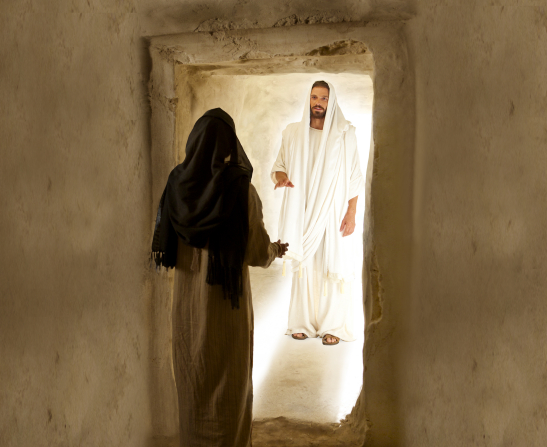
Jesus Christ speaks with Mary Magdelene after his resurrection
This week in my personal scripture study, I was contemplating the life and resurrection of Jesus Christ when I remembered a scripture from Abinidi's sermon.  He stated:

"And if Christ had not come into the world (speaking of things to come as though they had already come) there could have been no redemption.  And if Christ had not risen from the dead or have broken the bands of death, that the grave should have no victory, and that death shall have no sting, there could have been no resurrection."

"But there is a resurrection, therefore the grave hath no victory, and the sting of death is swallowed up in Christ.  He is the light and the life of the world; yea, a light that is endless, and shall never be darkened, and also a life that is endless, that there can be no more death." (Mosiah 16:6-9).

I love this scripture and the power it brings.  Because of Christ's Atonement, I know that I can be reunited with the ones I love and live with them again after I die.  Because of what He did for me, there is hope for a better future, and I can rise up and become better.  If we turn to Christ, there is no loss; no struggle; no suffering that we have to endure that will not be made up.

I invite you to ponder Christ's sacrifice and triumph not only this Easter but throughout the week.  Remember when you are going through your difficult trials that as difficult as they seem right now; as painful or strenuous or hopeless as they may seem, if we turn to Christ, everything will work out for our good, and no loss can be permanent.


References:
  • https://www.lds.org/media-library/images/jesus-christ-39623?lang=eng

Monday, April 10, 2017

"His Judgments are Just: Accepting Christ's Mercy

Yesterday during my scripture study, I was studying the account in the Book of Mormon where the prophet Abinidi prophesies of the sufferings, death, and ultimate triumph of Christ over death, and then invites those who threaten to kill him to return to Christ and receive His mercy.  As I read, Mosiah 16:1 stood out to me.  In it, Abinidi declared:

"The time shall come when all shall see the salvation of the Lord; when every nation, kindred, tongue, and people shall see eye to eye and shall confess before God that His judgments are just."

As I read, I imagined what it would be like to be there when Christ comes again; to kneel at his feet; to feel the Savior's embrace, and to have all people come to know the Savior.

I was especially struck by how Abinidi prophesies that after the people "see the salvation of the Lord", they will all declare that "God's judgments are just."  I realized that one reason why God can be perfectly just, as well as merciful, is because of Jesus Christ and the salvation he brought through His Atonement.  We all suffer pain and heartache in this life.  People are unkind and often cruel.  In addition, many suffer from natural disasters, the loss of loved ones, abuse, physical or mental illness, or other difficult circumstances.  To some, even to me sometimes, it can seem that life is very unfair.

However, because Jesus Christ suffered, died, and triumphed over death, he understands us perfectly and can help us to rise above every challenge or obstacle.  We don't need to "weep", "wail", or languish in self-pity;  through Jesus Christ, no matter what our struggle, whether a difficult exam or an excruciating trial, we can have faith that when we see all that Christ has done for us and all that he can yet do for us, we can find strength and with joy can one day say, "his judgments are just."

Monday, April 3, 2017

"Follow thou Me"

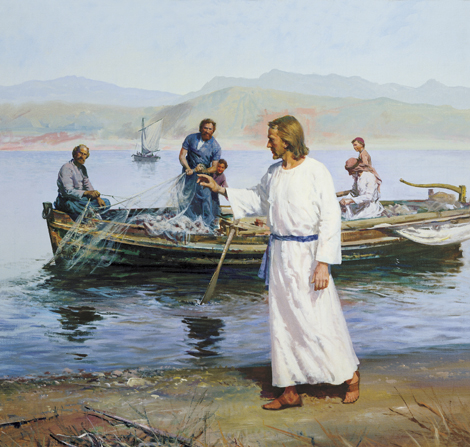
Jesus Christ calls his disciples to come follow him; They leave their nets and come to him. width =
This week, I have been reading in the Gospel of John in my New Testament Class.  One of the insights that stuck out to me was when Jesus was talking with Peter after His Resurrection.  He asks Peter three times: "Lovest thou me?", and after Peter responds in the affirmative, Jesus says, "Feed My Sheep", inviting Him to care for his brothers and sisters and bring them unto Christ. (John 21:15-17).

Less well known is the conversation that takes place afterward.  Jesus prophesies of Peter's coming martyrdom, and tells Peter: "Follow me."  In this way, Peter is given a glimpse of the sacrifices he would make for Christ and what Christ expected of him.  However, at that moment, Peter notices John, and remembering the love that Christ had shown John, asked Jesus: "Lord, and what shall this man do?" (vs. 21) In other words, Peter was essentially trying to compare his work, calling, and responsibility with John's.

Jesus responds with a gentle rebuke: "If I will that he tarry till I come, what is that to thee? Follow thou me." (vs. 22).

Although we often focus on this scripture as a witness of John the Revelator's ongoing mission on earth, in context, it also can teach us about how we should respond to callings and responsibilities in the church.

So often, it is easy to compare our callings, our blessings, or our opportunities with those of others.  We ask, "But what about them?"  We look to those who have more prominent callings such as "Elder's Quorum President", "Relief Society President", or "Zone Leader".  I know that many times, I have compared my calling or my present life experiences with those of others, but the more I do that, I just become resentful and feel self-pity.

It seems like Peter may have felt this way.  Because Peter knew John's close relationship with the Master, and especially if he had somehow heard about John's future transfiguration, it would be easy to feel less important or to want to compare his blessings or role with John's.   However, in this scripture, Jesus invites Peter to turn from others and look to Him.  It didn't matter to Peter what John's role would be.  He was just expected to follow Christ.

Similarly, it doesn't matter what blessings that others are receiving.  The gospel is between us and Him, and if we are doing all we can to follow Him, that is all that He expects of us.   We each have a role to play in Christ's work, and our joy and growth will come from our efforts to do what he has asked of us and to appreciate the opportunities that he has given us, not from how our efforts or blessings compare with other people.  Just as Jesus redirected Peter's focus towards Himself, as we let go of our need to compare ourselves with others and look to Christ for direction and strength, He can make us the people that he wants us to be.

I invite each of you (as well as myself) to study the talks from General Conference when they come out and ponder on how you can better look to Christ and fulfill His role for you.  I know that as we do so, He can help us to strengthen our relationships with Him and to know what He wants us to do.

Have a great week!

Monday, March 27, 2017

Saved through Jesus Christ

This has been an amazing week for me and there is so much I could talk about.  This week, we have been studying the Atonement of Jesus Christ, from the Garden of Gethsemane to the crucifixion.  Although there are so many aspects I could discuss, I have chosen a couple that stood out to me the most.

First, in my New Testament Class, my professor was discussing the Atonement of Christ when he made an interesting statement: "The Atonement doesn't save us."

What he meant by that is that often when Latter-day Saints discuss Jesus Christ's suffering, death, and Resurrection, they talk about how we should "turn unto the Atonement", or that "the Atonement can save us", or that "the "Atonement" can make us clean from sin, as if "The Atonement" is some divine entity or force that makes life better and that forgives us of our sins.

However, the Atonement of Jesus Christ is rooted and fundamentally focused on Christ and His mission.  Without Him, there would be no atoning sacrifice.  It is He, both a mortal and the sinless Son of God, who chose to suffer in our place.  It is He who descended from heaven to suffer for our sins, all the guilt that we have or will suffer for our sins, all our embarrassment or shame, as well as all of our hunger, our fatigue and exhaustion, our betrayal, and our anguish (Alma 7:11-12; Mosiah 3).  It is He who died and who rose from the dead, making it possible for all who die to rise from the dead and return to the presence of God.

He suffered it ALL, and He overcame it all.  Because of that, He knows us and understands us.  It is He from whom we seek relief and forgiveness of our sins, for he that has suffered for our sins knows how best to help us to overcome them and become better.  It is He that forgives us and offers us mercy, which he has power to do because of His Atoning Sacrifice.  He who has suffered all that seems unjust or unkind in our lives knows how best to help us to rise above these trials and injustices and not be limited by them.  He knows, He understands, He has power to save us, and He wants to save us.

I know that Jesus Christ is my personal Savior and that He has power to forgive me of my sins, that He has power to help me through my trials, and that He knows me and can help me through whatever I may go through.  I have felt His love personally in my life and have seen His hand in helping me to rise above darkness, sin, depression, and anxiety,  and to move forward with hope and peace.  I can't describe all that He has done for me to help me, my family, and my friends through difficult trials, despite that I continually don't live up to His expectations,

I have experienced His love in my life, and know that He can do the same for you; and for anyone who turns to Him in faith, ready to trust in Him and accept His sacrifice.

Whenever we fall, we can know that we do not rely on an arbitrary "grace" or a formulaic and abstract "Atonement"; we rely on the merits, mercy, and grace of the living and loving Christ (2 Ne. 2:7), who still knows us and who, because of what He suffered for us, has power to help us wherever we are at.  This can motivate us to better turn to the Savior, to feel more gratitude to Him for His infinite gift of love that He continues to offer us, and to share that love with those around us.



Monday, March 20, 2017

What Can the Ten Commandments Teach Us About Jesus Christ?

This week, as I was reading in the Book of Mosiah, I came across a passage where Abinidi is reciting the Ten Commandments to the wicked priests of Noah.  Usually, it is easy to skim over this passage. After all, many of us know the Ten Commandments by heart and assume that we know all that we need to about them.  However, as I was reading, something stuck out at me that I hadn't recognized before.

We often start reciting the 10 Commandments with the verse, "Thou shalt not have any gods before me" (Mosiah 12:35, see also Exodus 20:2),  yet in both Exodus 20 and in this recitation by Abinidi, the Lord actually starts by declaring who he is and his relationship with His people.  He states:

"I am the Lord thy God, who hath brought thee out of the Land of Egypt, out of the house of bondage. " (Mosiah 12: 34; see also Exodus 20:1).

Now, why would the Lord start his instructions with this?

The more I thought about it, I realized that while most of the commandments teach us what God wants us to do, this sentence teaches why we keep God's commandments and provides the motivation to do so.  We keep the commandments because we have a God and a Savior who delivered us.  That same Jehovah, the Lord who delivered the Israelites from bondage in Egypt and led them to the promised land, is also Jesus Christ, who suffered and died from our sins, delivering us from sin and death and enabling us to overcome our trials and reach our full potentials.  He is still here for us, and like then, He still wants to deliver us from our bondage, whether through sin or through the struggles of life.

As we remember Christ and all that He has done for us, and as we come to understand who He is and His Great Atoning Sacrifice, our desire to follow Him increases.  The more that we remember what Heavenly Father and Jesus Christ have done for us and strive to recognize their hand helping us day by day, the more we want to follow Him and do the things that He has asked us to do.  We want to follow Him and put Him first in our lives, not merely because he will punish us if we don't, but to show our gratitude for all that He has already done for us.   Moreover, as we turn to the Lord, showing Him our love and striving to keep His commandments, the Lord promises to show us "mercy" (Mosiah 13:14) and to help us to draw closer to Him.

This passage motivates me to remember all that Jesus Christ has done in my life and to strive to do the things that He has asked me to do.  As we take time each day and each week to remember Him in our lives and strive to turn to Him and do His will, I know that He can strengthen us and help us to accomplish all that He asks of us.


Monday, March 13, 2017

We Are All Lost Sheep: Coming Home and then Seeking the Lost

In the Gospel of Luke, Chapter 15, Jesus is talking with a group of “publicans (tax collectors) and sinners” when he is approached by a group of Pharisees.  The group of people question him, essentially asking him why he chose to spend his time with those that they deemed “sinners”. who ask him why he eats and spends time with publicans and sinners.   As a result of this question, Jesus gives the exquisite parables of the lost sheep, the lost coin, and the prodigal son.  


One thing that continued to strike me is the devotion and time that those that are seeking give to reclaim those that have been lost.  The shepherd “leave[s] the ninety and nine and goes into the wilderness”, leaving behind comforts to find the sheep who had wandered off.  The widow who loses a piece of silver (a day’s wage) searches all over her house until she finds it, and then she rejoices when she discovers it.  Finally, the father doesn’t go to find his son, because he knows that his son won’t come home if he goes to get him, but he is constantly watching and waiting.  When the son finally “came to himself” (vs 17), the father “saw him afar off, and ran to him, and embraced him, and kissed him” (vs. 20).  


These parables help me to better understand the love of the Savior for us whenever we become lost.  Whether we have strayed from the principles we know are right by accident, whether we have been neglected or offended by others and have lost hope, or whether we have willfully chosen to rebel against what we know is right, the Savior is always there, waiting for us to come home.  He is watching for us and will do all that we will let him to help us to return to his presence, live like him, and to feel of his love.  He is absolutely focused on our well-being.

In addition, I feel that these parables can help motivate us to have greater compassion for those who aren’t active in their faith or who aren’t living the way we think they should and to do all that we can to help them.  It is easy for us to judge others or to criticize or avoid those who don’t share our beliefs or standards.  It is also easy to forget or to neglect those who have gone astray, who aren’t attending church every week, or who may be struggling.  However, we are all in some way lost, and we all need the good shepherd.  Knowing this can motivate us to love others more, to be better friends, better home and visiting teachers, better missionaries, and better disciples of Christ; to go out of our way to love and help others as the Father and our Good Shepherd have loved us.

Monday, March 6, 2017

Walking on Water: Overcoming Doubt and Fear through Jesus Christ

In the Book of Matthew, it recounts the story of Jesus walking on water.  Jesus’s disciples were headed across the Sea of Galilee when they encountered a fierce wind that kept them paddling without progress for most of the night.  Suddenly, they saw a figure walking on water towards them.  Surprisingly, after the mysterious being identified himself as Jesus, Peter made the remarkable claim: “ Lord, if it be thou, bid thee come unto thee on the water.  And Jesus saith unto Him, “Come.”" (Matt. 14: 28-29).  


Most Latter-day Saints and other students of the Bible are probably familiar with how Peter actually was able to walk on water for a time. Think about that for a moment! Peter, this bold fisherman, who knew well enough that people don’t normally float in water, and who was now facing massive wind-driven waves in his path, actually had the faith and trust in Christ to walk on water.  He was committed to follow the Savior, even to the point that he did what for most people would be impossible.  Then, just as he was making progress, "he saw the wind boisterous” and “he was afraid, and beginning to sink” (Matthew 14:24-30).


I feel like many modern-disciples of Christ are similar to Peter in a way.  Those who have experienced a “mighty change in [our] hearts” (Alma 5 and have felt of the Savior’s love and forgiveness have felt strong desires to do the Lord’s will and have even seen him do things with us and make changes with us that we didn’t know were possible.  I know that I have felt this way multiple times in my life.  We want to follow the Savior and feel like we can accomplish the impossible.  However, in the midst of our trials, just as we are starting to change and to make progress, many of us let ourselves become distracted and let doubts and fears keep us from trusting in the Savior?  We may feel inadequate, afraid of what other people will think of us, or discouraged with our progress.  We may have fear or even question if God really loves us or if He will keep His promises with us.  As President Hinckley commented, we can also feel “fear of the future” “fear of loneliness”, or any number of things that make us forget our commitments with God.

However, no matter our fears, I know that as we turn to the Lord and call for him for mercy and strength, he will reach out for us.  Just as Jesus “immediately… stretched forth his hand, and caught [Peter] as he was drowning and called to Him (vs. 31), I know that he can catch us and help us to overcome our fears.  As we look to the Savior and trust in Him, no matter what our fears, he can help us to rise up and continue to reach our “impossible” goals.

Monday, February 27, 2017

"If Thou Wilt": Jesus Healing the Leper

Lately, we have been discussing the miracles of Jesus in my New Testament class.  One of the stories that stuck out to me is about a leper who comes to Jesus wanting to be healed.  As many are aware, leprosy was a gruesome flesh-eating disease that was basically a death sentence for many in the ancient world.  Those who caught the disease were rendered “unclean” by the Law of Moses and were ostracized from society for fear that others might catch the disease.

In this context, it is striking that in Matthew 8, Jesus doesn’t back away from him or shun him.  In fact, in response to his pleas, Christtouched him, saying I will; be thou clean.”  (8:3).  This scripture shows that despite the taboo and fear in that era, Christ reached out to all who needed him, no matter how far gone they may have seemed or how desperate their condition.  

It is a really comforting thing to me to recognize that no matter what mistakes we have made, sins we have committed, or trials we may face, Christ has power to help us through all of it.  He won’t shun us; he will do what he can to help us as soon as we are ready to turn to him in faith and are willing to do what he asks of us.  And just as the leper was cured of his leprosy “immediately” (vs. 3) as Christ healed him, Christ has power to heal us in whatever challenge we may face.

The other thing that struck me about this story, that my instructor pointed out in class, is how the leper asks Jesus for a blessing.  He simply asks Jesus: “Lord, if thou wilt, thou canst make me clean”  (Matthew 8:3).  In this verse, the leper clearly demonstrates trust that Christ has the power to heal him, but he doesn’t demand it -- he lets the Lord decide what course is best.  My instructor posed the question:

“What if in Jesus’s best wisdom, he felt it was best that the leper not be healed?”

Remarkably, it seems that this desperate man came humbly to the master, seeking for any relief but also willing to accept his fate and continue having faith in Christ even if it wasn’t his will.

This stuck out to me because sometimes, I feel like my prayers seem more like demands than requests, and that I come to God insisting that he help me with my specific challenge in the way that I want it rather than seeking to know His will for me.

“Please help me with this exam now,“ I have prayed.  “Please help me feel better now.”  “Please help me through this difficult trial I am facing.”  

We sometimes pray to God expecting or even insisting that He help us, but what if he knows that the best thing for us right now is to struggle and to work through our trials in order to grow, rather than having our burdens taken away?  Are we ready to accept Christ’s will for us then?  Are we prepared to stay faithful, keep working, and keep trusting in Christ, even when things don’t go the way we want them to or when we don’t receive the blessings we are seeking?

This scripture motivates me, and it can motivate all of us, to come to the feet of the master, putting our trust in him that if it is his will, he can heal us and he can help us with our different challenges.  

As we do so, we can have confidence that if it is Christ’s will that we receive the blessing that we seek, we can receive it -- but we can also have assurance that if it is not his will, or even if it is not his will for us at the moment, Christ still loves us, and whatever happens instead will ultimately be “for [our] good” (D&C 122: 7) as we keep moving forward with trust in Him.

Monday, February 20, 2017

What is faith?

What is faith?

I thought I knew the answer to this question.  After all, I believe that Jesus Christ is my Savior, I have a testimony and knowledge of His teachings in the Bible, the Book of Mormon, and other books of scripture, and I was trying to live the standards I had been taught.  Isn't that enough?

However, the past couple of weeks, I have become overwhelmed trying to do everything that I have been expected to do that I finally broke down and turned to the Lord, asking what He would have me do.  One thought that came to mind was to read in Preach My Gospel, the teaching manual for Latter-day Saint missionaries, on the topic of faith.  A one passage stuck out to me in particular:


"Faith in [Christ] means that you trust Him and are confident that He loves you" (Preach My Gospel, 116)

As I read this, I realized that although I have desires to follow God and I certainly believe that He exists, I often doubt that I can do all that He asks me to do, and sometimes I lose hope that I can meet His expectations for me.  However, as we learn about the Savior, we realize that He is not an arbitrary monarch waiting for us to fail, nor is he a distant deity who has little conception of our struggles.  He is our loving Savior, who knows all things and who was willing to suffer and die for our sins.  He doesn't want us to fail -- He wants to help us to succeed.

Now in doing so, He doesn't expect us to sit back and let us do all of the work.  As I stated in my last blog post, Christ expects us to do what we can do and then put our trust in Him to make up for where we lack.  However, our faith in Christ, which as Preach My Gospel later says, "motivates us to act" (p. 116) should be based not only on our belief that Christ lived and that He died for us, but on our trust that He really has our best interests at heart and that He is willing to help us today, as soon as we put our trust in Him and make efforts to do His will.

I also found a scripture in Alma 32 of the Book of Mormon that helped me to better see how I can put this into practice.  In this scripture, the prophet Alma states that faith " is when we "believe in things which are not seen which are true" (vs. 21), explaining that when we have faith, we put our hope and trust in something that we can't see or understand right away.

From this scripture, I realized  that we not only exercise  faith that a God exists and that Jesus Christ rose from the dead, but whenever we work to achieve a goal or try to accomplish something worthwhile.  We can't see the end result, but God can, and as we strive to learn God's will for us and then act to accomplish it with faith in Him, he can help us to accomplish our righteous goals.

I


Monday, February 13, 2017

"Diligently" Act and then "Stand Still"

I have a confession.  I am a worrier.  I constantly am concerned about how I will accomplish all that I am expected to do or about what will happen next, and that sometimes keeps me from doing what needs to be done and being all that I could be.

The last couple of weeks especially, I have felt overwhelmed by all that is expected in school and in otheraread in my life and often wonder how I can reach all the goals that I have set.

As I was thinking about this, I remembered the scripture in Doctrine and Covenants 123:7.  It reads:
cripture from Doctrine and Covenants 123:7, which really stuck out to me.  It reads:

"Therefore, dearly beloved brethren (and sisters), let us cheerfully do all things that lie in our power, and then may we stand still, with the utmost assurance to see the salvation of God, and for his arm to be revealed."

To me, this scripture means that God expects us to do all that we came do and to willingly give our best efforts to accomplish our goals and do his will.  He doesn't expect us to be perfect, but he does expect us to show Him that we are willing to do all we can to accomplish our righteous goals.

However, despite our best efforts. we all fall short.  In addition, there are many things that are not completely in our control, such as what the girl (or guy) you want to ask on a date will think of you, or if we have a conflict that keeps us from finishing all of our assignments on time, or how that person will respond to your efforts to share your beliefs.  All we can do is act on our faith in Christ by doing all "that is in our power", and then to "put it in the Lord's hands" and trust that God will help things work out in a way that is best for us.

This scripture motivates me to work harder and to keep trying to accomplish the goals I have set, even if they seem distant for me right now or difficult to accomplish.  I know that I cannot "sit still" and do nothing, but I also know that I don't have to do it alone, and that when I have expended my best efforts, He will help things work out in a way that He know is best and will guide me in ways that will help me draw nearer to Him.  I know that truly, as we act in faith the best we can with trust in God and then let God take care of the rest , we can "see the salvation of God" and recognize God's hand working in our lives for our good and for the good of others.


Monday, February 6, 2017

“Condemn Me Not Because of Mine Imperfection” (Mormon 9:31)

In my New Testament class this past week, we have been discussing the distinct accounts of the four gospel writers.  As we were discussing their similarities and differences, we consistently discussed how God was able to work through individuals despite their weaknesses and imperfections.  


For instance, my professor Brother Griffin discussed how at one point in their ministry (to use modern-day speech), Paul had a disagreement with John Mark, traditionally one of the gospel writers, about which way that they should go to do missionary work.  


Apparently, this disagreement was so intense that John Mark chose to leave his mission for Jerusalem and that later on, Paul refused to even take John Mark on their travels to share the gospel and ended up picking a new missionary companion.  However, despite their weakness, God was still able to work through them to accomplish His work, with Paul writing powerful epistles and testifying boldly of Christ, and with John Mark traditionally going on to write one of the Gospel accounts of the ministry of Christ (The Gospel of Mark).


This struck me because I feel like we don’t always approach problems or questions today in the same way.  It is easy to read an opinion or notice a perceived or actual weakness in somebody and then refuse to associate with them because of that blemish or weakness.


For instance, someone may read something in the scriptures, such as the Book of Mormon, that doesn’t seem to make sense or doesn’t seem right at the time and if they continue to fixate on it, they may determine that the scriptures are untrue.  However, in doing so, they miss out on the powerful truths that the scriptures can provide and the power they have to bring people to salvation.


One thing I feel can help with this problem is, like my teacher mentioned, to “look at people [and scriptural texts] in their context”, to try to understand them before judging them, and by striving to recognize the good that God can do through weak and striving individuals.  


Especially in cases where we don’t understand something, to give them the benefit of the doubt and recognize the good that God can do through them can help us to find greater good in them and discover truths we may not have otherwise discovered.  


As we accept and allow individuals, even church leaders, to be imperfect, as we seek to understand them from their perspective and context rather than from our own, and as we seek from God to know what we can learn from them, we can not only come to a better understanding of truth, but can come to see how God can work through us to do his work, despite our weaknesses and our imperfections.  


As Moroni, an ancient prophet, stated near the close of the Book of Mormon, “condemn me not because of mine imperfection, … neither them who have written before…, but rather give thanks unto God that he hath made manifest unto you our imperfections, that ye may learn to be more wise than we have been” (Mormon 9:30).  

Through doing so, we can come to recognize, as Lehi and as my Doctrine and Covenants teacher taught, that in the end, we are all human, imperfect, and rely on Christ, and we can better recognize how God can work through others and through us to accomplish His will.

Monday, January 30, 2017

Learning to Submit to the Will of the Lord

For one of my classes this semester at Brigham Young University, we have been studying the life, teachings, and ministry of Jesus Christ from before He came to earth until the present.  As part of this class, we have been asked to share some insights that we learn from class or from our personal scripture study that were meaningful to us or helped us to draw closer to Christ, and that we feel could help others.

In my scripture study this week, I was reading in the Book of Mosiah, found in the Book of Mormon: Another Testament of Jesus Christ.  One verse that has always stuck out to me struck me even more this time.  In Mosiah 3:17, it states: " For the natural man is an enemy to God, and has been from the fall of Adam, and will be forever and ever, unless he yields to the enticings of the Holy Spirit, and putteth off the natural man, and becometh as a saint through the atonement of Christ, and becometh as a child, submissive, meek, humble, patient, full of love, willing to submit to all things that the Lord seeketh to inflict upon him..." (Mosiah 3:19).  As I was reading this scripture, I realized that most of the attributes that it encourages us to develop have to do with the amount of trust we have in God and our willingness to do His will instead of ours.

I have found in my life that it can be difficult to trust that everything will be okay and to "submit" to the will of others, especially when we don't understand why we are asked to do something or why something difficult is happening in our lives.    Naturally, we want to do what makes sense to us, we want to be in control, and we want to understand something before we act on it.   However, this scripture shows us that as we become willing to listen to the voice of the Holy Ghost - to act on those feelings we have to do something good or to serve God, Christ can help us to come to know Him and to know that He has our best interests at heart.  Through acting on these promptings and receiving the Atonement in our lives, we can see the evidence of Christ's love in our life and will want to change to better submit to His will.  He can change us, but only as we learn to "yield" and to choose to trust in His voice.